Breeding Best Practices
The Ragdoll Breed Association is committed to promoting the highest standards of ethical, responsible, and welfare-focused breeding. These Best Practice Guidelines are designed to support breeders in producing healthy, well-socialised, and type-correct Ragdoll kittens, while protecting the long-term integrity of the breed.
These guidelines complement the Club’s Code of Ethics, Breeder Guidelines, and GCCF regulations, and reflect recognised best practice within the cat fancy.
Welfare First
The health, welfare, and wellbeing of all cats must always be the primary consideration.
Breeders must ensure:
Clean, safe, enriched living environments
Appropriate nutrition, veterinary care, and preventative health programmes
Regular grooming and parasite control
Social interaction, play, and mental stimulation
Breeding decisions must never compromise the welfare of queens, studs, or kittens.
Responsible Breeding Practices
Breeding must be undertaken with careful planning and a clear understanding of genetics, health, and temperament.
Breeders should:
Breed only from cats of sound temperament and good health
Avoid breeding from cats with hereditary defects or known health concerns
Plan matings to improve and preserve breed type and genetic diversity
Avoid excessive or indiscriminate breeding
Queens must be physically mature, in good condition, and allowed appropriate recovery between litters.
Health Testing & Genetic Responsibility
Responsible breeders must follow GCCF Ragdoll Registration Policy requirements and current veterinary guidance.
This includes:
Testing breeding cats for Ragdoll HCM mutation
Understanding and managing blood group compatibility
Maintaining accurate health records
Being open and transparent with buyers about health testing
Breeders should remain informed of developments in feline genetics and breed-specific health issues.
Mating, Pregnancy & Queen Care
Queens must be:
Fully mature before breeding
Maintained in excellent health and body condition
Mated at appropriate intervals that prioritise welfare
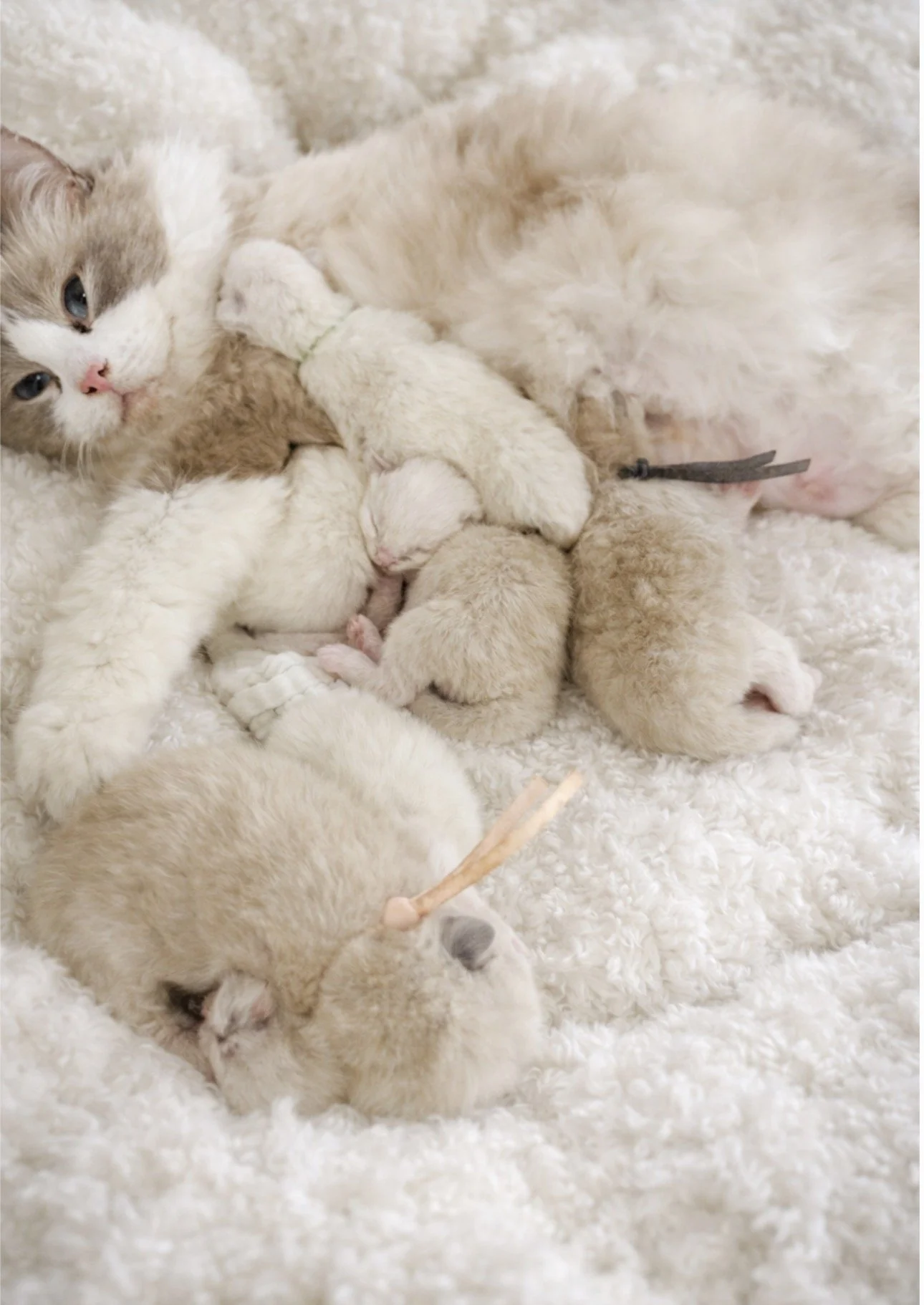
During pregnancy and kitten rearing, queens must receive:
High-quality nutrition
Veterinary support where required
A quiet, safe, clean environment for raising kittens
The wellbeing of the queen must always take priority over breeding plans.
Kitten Rearing & Early Development
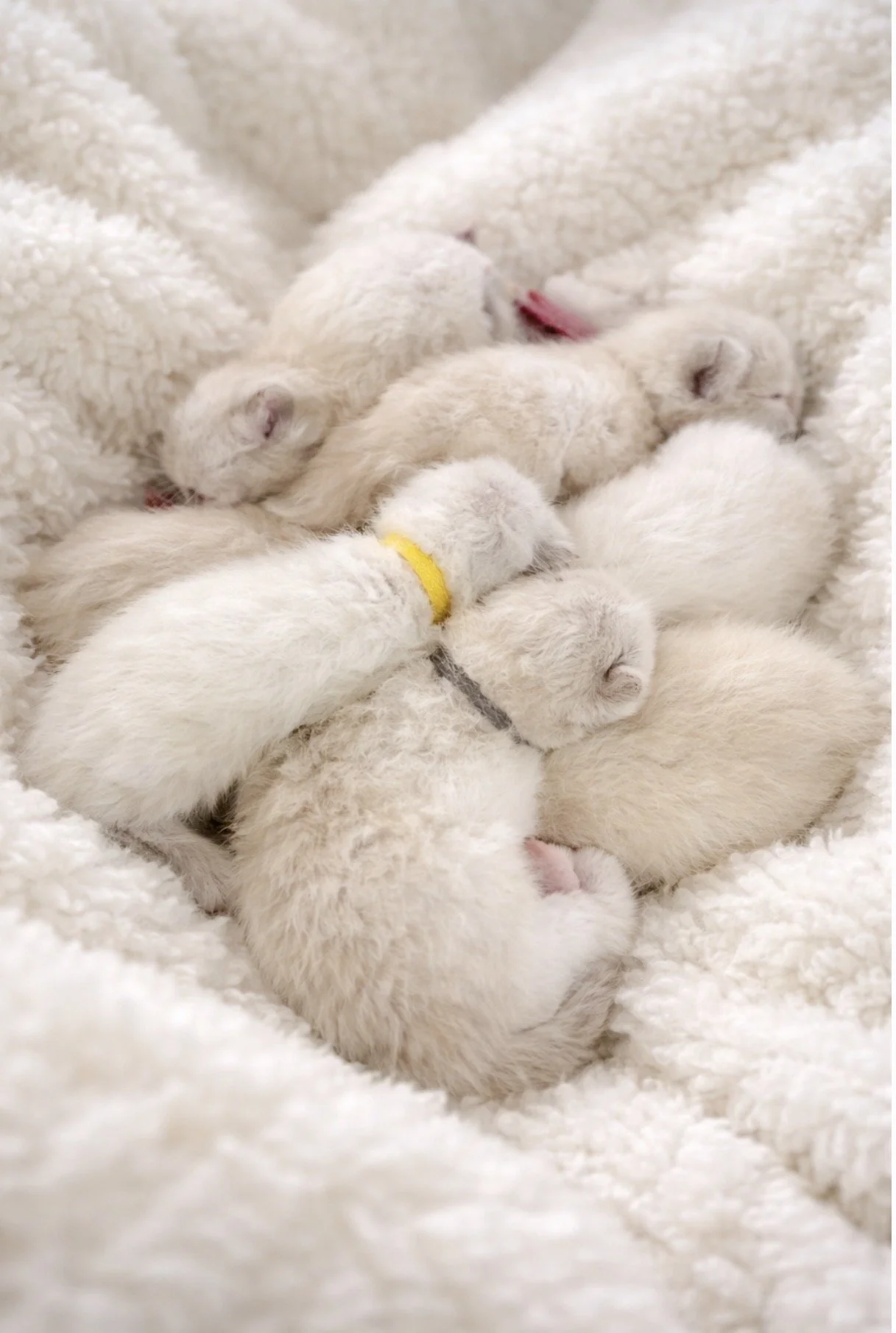
Kittens must be raised in a home environment where they are:
Handled daily and positively socialised
Exposed to normal household sounds and experiences
Provided with clean bedding, litter training, and enrichment
Kittens must:
Remain with their mother and littermates for a minimum of 13 weeks
Receive appropriate worming and vaccination programmes
Be healthy, confident, and well-socialised before leaving for new homes
Placement into New Homes
Breeders have a responsibility to ensure kittens are placed into suitable, loving homes.
Breeders must:
Carefully assess prospective owners
Provide clear written care guidance
Supply all GCCF-required documentation
Offer ongoing support and advice
Breeders should remain available for the lifetime of the cat and assist with rehoming if required.
Documentation & Transparency
All kittens must be sold with appropriate documentation in line with GCCF requirements.
This includes:
3-generation pedigree
Registration documentation or mating certificate
Vaccination record
Microchip details
Health and care information
Written contract of sale
Breeders must be honest and transparent in all advertising and communication
Resources List
Professional Conduct & Reputation
Breeders represent both the breed and the Club.
Members are expected to:
Communicate respectfully with the public and fellow breeders
Support and mentor new breeders where appropriate
Avoid behaviour that brings the Club or breed into disrepute
Uphold the highest standards of honesty and professionalism
Education & Continuous Improvement
Responsible breeders commit to ongoing education.
Breeders are encouraged to:
Attend seminars and breed education events
Stay informed on GCCF policy updates
Develop knowledge of genetics, health, and welfare
Share knowledge within the breeder community
Our Commitment
By following these Best Practice Guidelines, breeders help to protect the future of the Ragdoll breed and maintain the high standards expected by the Ragdoll Breed Association and the GCCF.
Together, we can ensure that every Ragdoll kitten is bred responsibly, raised with care, and placed into a loving and suitable home.